The demand for residential energy security has shifted significantly toward low-noise solutions as homeowners seek to balance reliability with environmental comfort. Finding a professional silent diesel generator for home Supplier involves more than comparing power ratings; it requires an understanding of acoustic engineering and emission compliance to ensure the system integrates seamlessly into a residential neighborhood.
Noise pollution remains the primary barrier to adopting diesel backup power in urban and suburban areas. While standard open-frame generators are efficient, their decibel levels often exceed local municipal codes, leading to installation disputes and operational restrictions. The industry response has been the development of advanced sound-attenuating canopies and modular silent containers that encapsulate the engine and alternator.
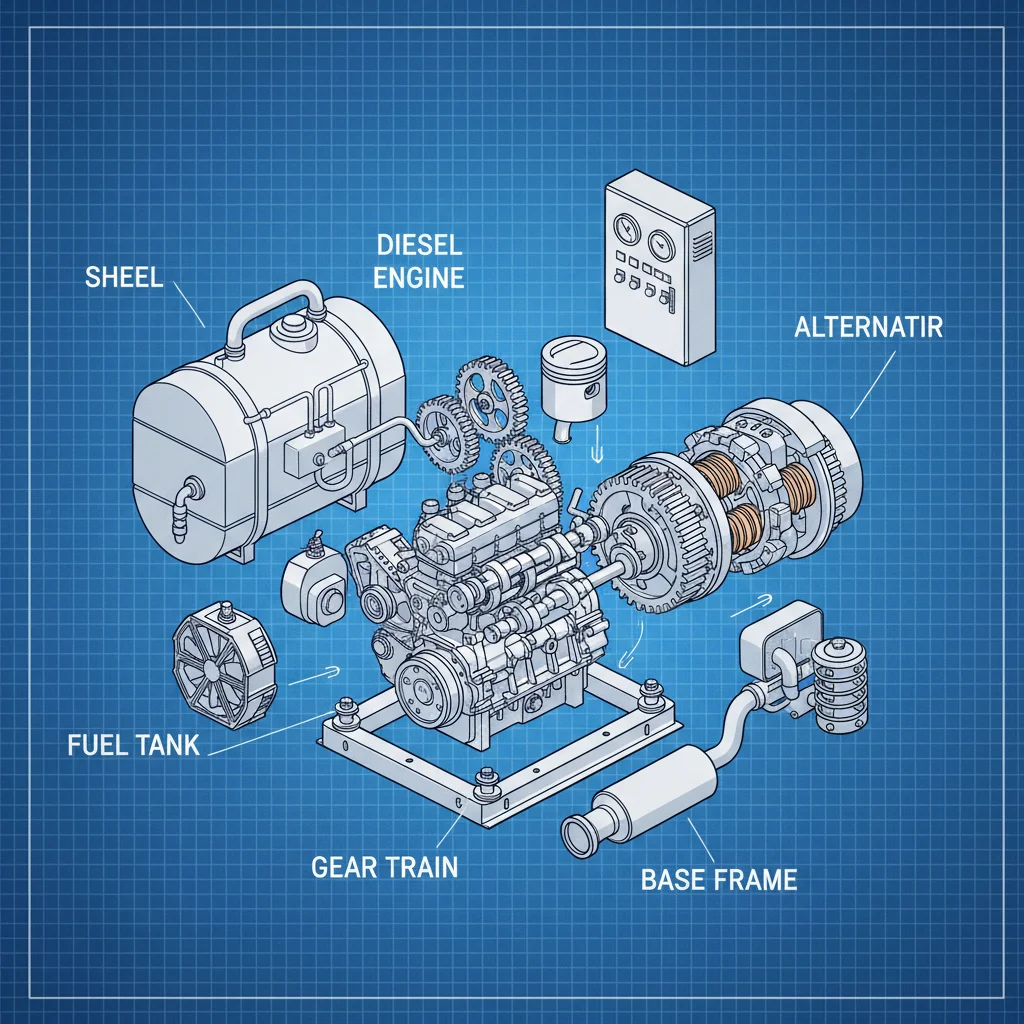
This technical analysis examines the engineering requirements for home-based silent power systems, focusing on the trade-offs between sound suppression, thermal management, and fuel efficiency. For those seeking high-performance energy continuity, consulting a specialized silent diesel generator for home Supplier is essential to ensure the chosen configuration matches the specific load profile and noise constraints of the property.


The reduction of noise in diesel generators is achieved through a combination of passive and active attenuation. Passive systems utilize high-density mineral wool or specialized acoustic foams that absorb sound energy, preventing it from reflecting off the inner walls of the canopy.
Critical attention is paid to the "acoustic leak" points, such as the exhaust outlet and air intake. Professional systems employ dissipative silencers and labyrinthine air paths to disrupt sound waves without restricting the airflow necessary for engine combustion.
When evaluating a system, the kVA rating must be balanced against the available space. For residential applications, a power range from 20 kVA to 2500 kVA is available, although home setups typically occupy the lower end of this spectrum. The engine configuration (4, 6, or 12 cylinders) directly influences the vibration frequency and the subsequent requirement for anti-vibration mountings.
Control systems play a pivotal role in noise management. Digital Control Panels and Automatic Mains Failure (AMF) modules allow for precise load management, preventing the engine from running at inefficient, high-RPM states that generate excessive noise.
Fuel efficiency is another critical metric. Advanced engine designs optimize the fuel-to-air ratio, which not only reduces operating costs but also minimizes the combustion noise and carbon emissions, aligning with international energy standards.
A significant engineering challenge in silent generators is the conflict between sound insulation and heat dissipation. Soundproof canopies effectively trap heat, which can lead to engine overheating if the cooling system is not oversized for the enclosed environment.
Furthermore, the integration of remote monitoring allows operators to track real-time temperature and frequency diagnostics. This proactive approach prevents thermal runaway and reduces the risk of unexpected downtime in critical backup scenarios.
Reliability in residential backup power is measured by the system's ability to achieve rapid startup and maintain a consistent output under fluctuating loads. The use of premium alternators and top-tier engines ensures that the transition from grid to backup power is seamless.
The following assessment scores illustrate the relative engineering balance between different generator configurations, emphasizing how specialized silent solutions optimize the trade-off between noise reduction and long-term durability.
Typical deployment involves the installation of a containerized unit in a designated outdoor area. In noise-sensitive city environments, the priority is maximum attenuation, requiring heavier sound-absorbing materials and precision-engineered silencers.
In more remote residential sites, the focus may shift toward environmental adaptability. For example, units equipped with heavy-duty anti-dust systems and enhanced filtration are deployed in arid regions to prevent particulate contamination from affecting engine performance.
Modern power systems must adhere to strict international emission standards to be viable for residential use. Compliance with ISO, CE, EPA, and EU Stage V regulations is no longer optional but a baseline requirement for any reputable supplier.
The shift toward hybrid compatibility is a growing trend. Integrating diesel generators with solar photovoltaic (PV) systems creates isolated microgrids that optimize fuel consumption and reduce the total carbon footprint of the home energy system.
Future R&D is focusing on the further reduction of nitrogen oxides (NOx) and particulate matter through advanced filtration and intelligent combustion control, ensuring that backup power remains sustainable.
Selecting the right configuration requires a detailed analysis of the power load, the acoustic environment, and the local climate. A standard open-frame unit is insufficient for residential needs, whereas a fully containerized silent unit provides the necessary isolation.
The comparison between standard and optimized silent solutions highlights the long-term return on investment (ROI), where reduced maintenance via predictive monitoring and lower fuel consumption outweigh the initial capital expenditure.
The following matrix provides an engineering framework for evaluating different configuration profiles based on operational needs.
| Configuration Type | Acoustic Profile | Environmental Fit | Recommended Use Case |
|---|---|---|---|
| Basic Silent | Standard Attenuation | General Purpose | Suburban Residential |
| Advanced Silent | High Attenuation | Urban/Noise-Sensitive | High-Density Housing |
| Heavy-Duty Silent | High Attenuation | Arid/Dusty Regions | Remote Estate |
| Hybrid Integrated | Optimized Attenuation | Sustainable/Green | Solar-Linked Homes |
| Parallel Config | Distributed Noise | High Power Demand | Large Commercial Villas |
| Precision Modular | Custom Attenuation | Tight Space Constraints | Urban Micro-Grids |
Customized orders, including specific sound-attenuating canopies or anti-dust configurations, are typically produced within 7-10 days. This efficiency is possible due to the maintenance of a large inventory of raw materials and standardized modular components. Total delivery time will vary based on the shipping destination and customs clearance procedures.
Yes, professional units are manufactured to meet ISO and CE standards. For markets with stricter environmental regulations, configurations can be tailored to meet EPA and EU Stage V emission requirements. Noise levels are managed through certified silent containerized options that ensure the unit operates within residential decibel limits.
Absolutely. Modern systems are designed for hybrid compatibility, allowing for the creation of isolated microgrids. In this setup, the diesel generator acts as a secondary power source that supplements solar energy during low-sun periods or peak loads, significantly optimizing operational costs and reducing the overall environmental impact.
Remote monitoring platforms enable real-time tracking of voltage, frequency, and fuel levels. By using diagnostic tools to identify anomalies before they lead to system failure, homeowners can move from reactive to proactive maintenance. This reduces unexpected downtime and extends the overall service life of the engine and alternator.
The minimum order quantity is 1 set. This ensures that high-end, industrial-grade power solutions are accessible for individual home projects as well as large-scale commercial developments, providing the same level of engineering excellence regardless of the order volume.
Yes. For high-temperature or arid regions, specialized heavy-duty anti-dust generator sets are available. These units feature enhanced air filtration systems to prevent dust ingress and oversized cooling modules to ensure the engine remains within its thermal operating window despite extreme external heat.
The transition toward silent, emission-compliant power systems reflects a broader industry movement toward sustainable and community-friendly engineering. By prioritizing acoustic attenuation and thermal efficiency, residential backup solutions no longer require a compromise between reliability and quality of life.
For homeowners and developers, the practical implication is clear: the long-term value of a system is defined by its integration capabilities and its adherence to international standards. Engaging with a proven silent diesel generator for home Supplier ensures that the installation remains an asset rather than a liability, providing seamless energy continuity for years to come.