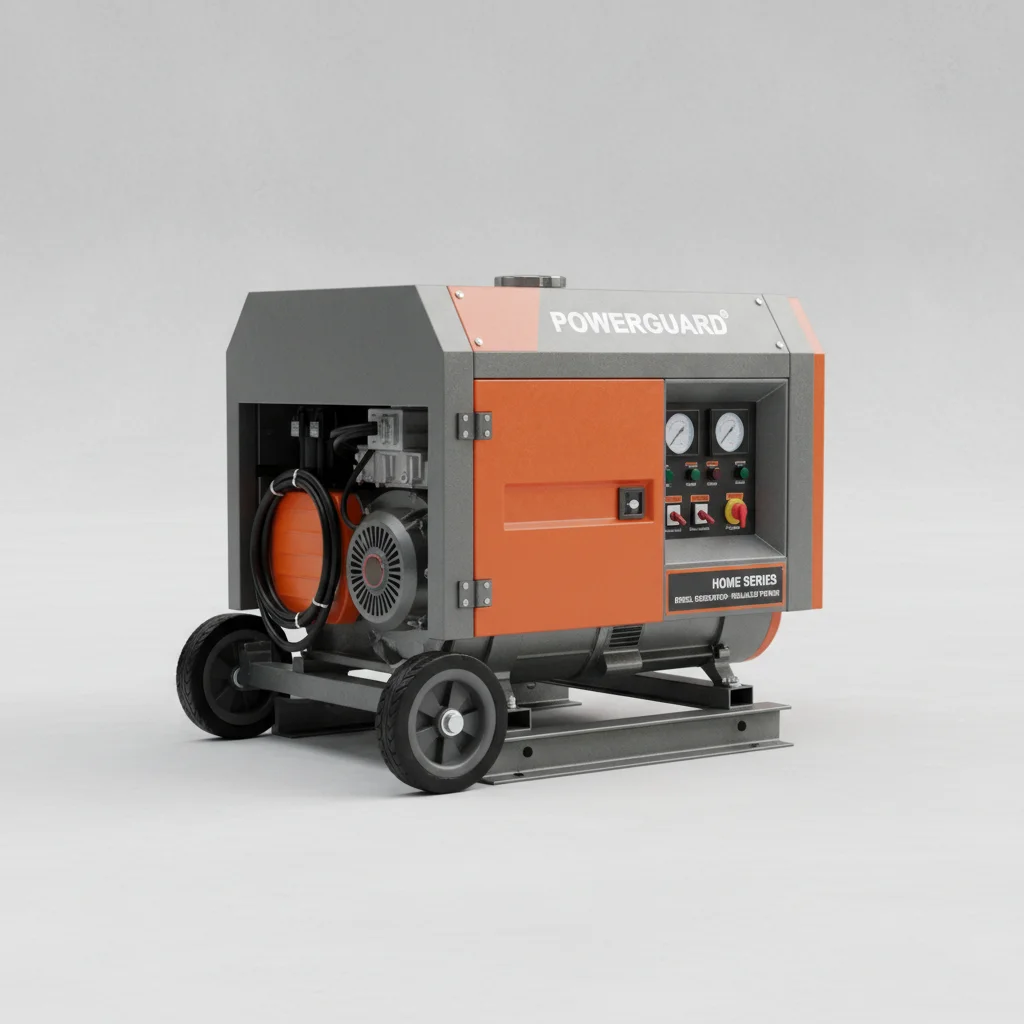
When searching for a reliable diesel generator for home price Supplier, homeowners often find themselves overwhelmed by the disparity between entry-level portable units and permanent standby systems. The primary challenge is not just the initial acquisition cost, but identifying which power capacity truly aligns with a household's critical load requirements without overspending on unused headroom.
The financial decision involves balancing upfront capital expenditure against long-term operational costs, including fuel consumption and maintenance cycles. For residential users, the integration of these systems often relates to broader categories such as Generator By Power Range and Generator By Structure, where the choice between a silent canopy and an open frame can significantly impact the property's acoustic environment and the system's longevity.
Understanding the technical nuances behind engine efficiency and enclosure quality allows buyers to move beyond simple price comparisons. This guide analyzes the critical factors that influence residential power procurement, providing a framework to evaluate a diesel generator for home price Supplier based on total cost of ownership and technical reliability.


A residential diesel generator is more than just an engine; it is a complex system comprising a prime mover, an alternator, and a control interface. For home users, the structure is typically divided into open-type units for utility sheds and silent-type units designed for outdoor placement near living quarters. The core architecture must prioritize stable voltage output to protect sensitive home electronics, such as smart appliances and home office servers.
The integration of automatic transfer switches (ATS) represents the shift from manual backup to seamless power continuity. By monitoring the main grid, these systems trigger the generator to start and assume the load within seconds of a failure. This architecture ensures that critical systems, including security alarms and refrigeration, remain operational without human intervention, which is essential for modern smart home ecosystems.
When evaluating equipment, fuel efficiency stands as a primary KPI. Advanced engine management systems reduce the consumption of diesel by optimizing the combustion cycle based on the current load. This is particularly vital for homeowners who may only run their generators for a few hours a month, as fuel stability and consumption rates directly impact the operational budget.
Acoustic performance is another critical metric. In residential zones, noise pollution can lead to neighborhood disputes or regulatory fines. High-quality silent canopies employ multi-layer sound-absorbing materials and optimized airflow paths to attenuate decibel levels while preventing engine overheating. This balance of cooling and noise suppression is a hallmark of professional engineering.
Reliability under varying loads, often referred to as load-handling capability, determines if a generator can handle the "inrush current" of heavy appliances like air conditioners. Systems that maintain stable frequency and voltage during these spikes prevent equipment damage and ensure a consistent power supply across all household circuits.
The initial purchase price is only one component of the total cost of ownership (TCO). To determine the true value, homeowners must factor in the installation costs, the frequency of oil and filter changes, and the projected lifespan of the engine. A cheaper unit with low-grade components often results in higher maintenance costs and shorter service intervals.
True value is found in the intersection of fuel economy and durable construction. Investing in a system with a heavy-duty design and precision-engineered alternators reduces the risk of catastrophic failure during prolonged outages, ensuring the cost-per-hour of operation remains low over a 10-to-20-year lifecycle.
Furthermore, the resale value of a well-maintained diesel generator from a reputable manufacturer remains significantly higher than that of generic brands. By selecting a supplier that provides accessible spare parts and professional technical support, homeowners protect their investment and ensure that the system can be upgraded or repaired efficiently.
Selecting the correct kVA rating is a common point of failure in residential procurement. Under-sizing a generator leads to frequent overloading and premature engine wear, while extreme over-sizing results in "wet stacking," where the engine does not reach operating temperature, leading to carbon buildup in the exhaust.
The following analysis demonstrates the relationship between typical residential load categories and the recommended power range to ensure operational stability and fuel efficiency.
In urban residential complexes, the priority is often a silent, compact standby unit that can be tucked away in a parking garage or side yard. These users prioritize low emissions and noise compliance to avoid disturbing neighbors, making silent containerized or canopy solutions the most viable option for high-density living environments.
Conversely, for rural estates or island resorts, the generator often serves as the primary power source rather than just a backup. In these "lone grid" scenarios, the emphasis shifts toward extreme durability and the ability to operate in parallel. Incorporating diesel generators with solar PV systems creates a microgrid that reduces diesel logistics costs while maintaining 24/7 reliability for desalination and HVAC systems.
The trajectory of residential power is moving toward intelligent, remote-managed systems. Modern diesel generators now feature digital panels that allow homeowners to monitor fuel levels, battery health, and engine temperature via smartphone applications. This transition to predictive maintenance reduces downtime and prevents emergency failures.
Environmental regulations are also driving the adoption of cleaner fuel options and advanced emission controls. While diesel remains the gold standard for reliability and energy density, the integration of intelligent load-sharing allows generators to operate at their most efficient points, reducing the overall environmental footprint of home backup systems.
As home energy demands grow with the adoption of electric vehicles (EVs), the need for higher capacity and more stable power output becomes evident. Modular systems that allow for future capacity expansion ensure that homeowners do not have to replace their entire power plant as their energy needs evolve.
The installation phase is where many residential projects encounter friction. Proper site preparation—including a level concrete pad and adequate ventilation—is non-negotiable. Poor airflow can lead to overheating and unexpected shutdowns, while an unstable base can cause vibration-induced mechanical wear over time.
Electrical integration requires strict adherence to local safety codes to prevent "backfeeding" into the utility grid, which is both illegal and dangerous for utility workers. A professional installation ensures that the transfer switch is correctly wired and that the grounding system is robust enough to handle fault currents.
Ongoing maintenance is the final hurdle. Establishing a routine for oil changes, coolant checks, and exercise runs ensures the engine is ready to start instantly when the grid fails. Neglecting these basics often results in "start-up failure," the most common problem reported by residential users during actual power outages.
| Requirement | Basic Backup | Full-Home Support | Off-Grid Estate |
|---|---|---|---|
| Capacity Range | 10-20 kVA | 30-60 kVA | 100+ kVA |
| Enclosure Type | Open/Portable | Silent Canopy | Containerized |
| Control Mode | Manual Start | ATS Automatic | Parallel System |
| Fuel Storage | Small Tank | External Tank | Bulk Storage |
| Noise Priority | Low | High | Medium |
| Maintenance | Annual | Quarterly | Monthly |
The price is primarily driven by the power capacity (kVA), the engine brand, and the type of enclosure. Silent canopies increase the cost due to sound-absorbing materials and engineering, while automatic transfer switches (ATS) add to the initial investment but provide higher convenience and safety compared to manual systems.
Yes, for most urban and suburban environments, a silent generator is essential. These units use acoustic insulation to reduce noise levels, ensuring compliance with local noise ordinances and preventing disruptions to the homeowner and neighbors, especially during nighttime operation.
Calculate the total wattage of all critical loads (lights, fridge, pumps) and add the starting wattage of the largest motor (like an AC unit). It is recommended to operate the generator at 60-80% of its rated capacity for maximum efficiency and longevity, avoiding constant full-load operation.
With professional installation and a strict maintenance schedule, a high-quality diesel generator can last 15 to 20 years. Regular oil changes, coolant replacement, and periodic "exercise" runs are critical to preventing engine degradation and ensuring reliable starts.
Yes, provided the unit has sufficient kVA capacity to handle the high inrush current of the AC compressor. For whole-home support, a stationary diesel unit with an ATS is usually required to manage the load distribution across the entire electrical panel.
Basic inspections should be done monthly, while full service—including oil and filter changes—should typically occur every 200-250 operational hours or once a year, whichever comes first. This ensures the fuel system remains clean and the engine operates at peak efficiency.
Selecting the right power backup system requires a shift in focus from the initial purchase price to the long-term operational value. By prioritizing engine efficiency, acoustic performance, and a correctly matched power capacity, homeowners can ensure an uninterrupted energy supply that protects both their electronics and their quality of life.
Whether you are securing a city residence or powering a remote estate, partnering with a supplier that understands the technical demands of residential environments is key. For professional guidance on sizing and technical specifications, explore the comprehensive solutions available at https://www.thegeneratorset.com to ensure your home remains powered regardless of grid stability.