A whole home diesel generator supplier provides critical infrastructure for homeowners and commercial property managers who cannot afford power interruptions. These professional suppliers offer high-capacity diesel power plants designed to support everything from basic lighting to heavy-duty HVAC systems and medical equipment during grid failures.
The challenge for many users lies in balancing power output with noise pollution and environmental regulations. Choosing a supplier that integrates advanced sound-attenuating canopies and compliant emission systems is essential for urban and residential deployment where strict local ordinances apply.
This guide explores the technical specifications, selection criteria, and operational advantages of professional backup power systems. By analyzing engine types, power ranges, and maintenance requirements, readers can make an informed decision on securing a reliable power partner for long-term energy security.

1Understanding Residential Diesel Power Systems

Whole home diesel generators are engineered to provide an autonomous power source that activates immediately upon the loss of utility power. Unlike portable units, these systems are typically permanently installed and integrated into the home's electrical panel via an Automatic Transfer Switch (ATS), ensuring a seamless transition that protects sensitive electronics from voltage spikes.
The role of a professional supplier extends beyond the hardware; it involves calculating the total peak load of a residence to prevent under-sizing, which leads to frequent failures, or over-sizing, which results in inefficient "wet stacking" where unburnt fuel accumulates in the exhaust.
From a manufacturing perspective, these units are categorized by their structure—ranging from open-frame industrial types to silent-canopy residential versions. The silent types utilize acoustic foams and vibration-damping mounts to minimize the auditory impact on the surrounding neighborhood.
2Core Technical Specifications and Design
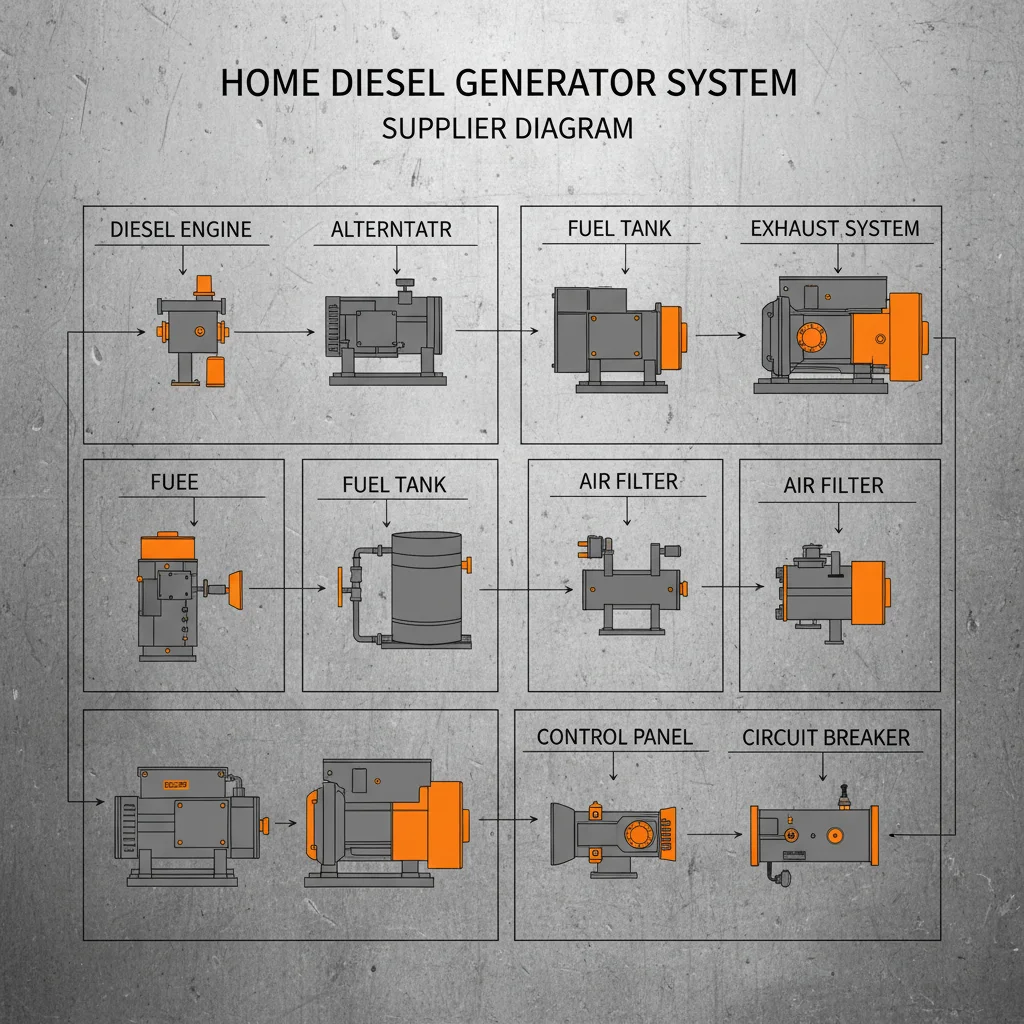
High-performance diesel generators are defined by their engine efficiency and alternator quality. Most professional-grade units utilize a four-stroke diesel engine paired with a brushless alternator to ensure a clean sine wave of electricity, which is critical for powering modern computers, smart home hubs, and medical devices.
Cooling systems are another critical design factor. Oversized radiators and forced-air cooling allow these generators to operate at full load for extended periods, even in high-ambient-temperature environments, without overheating or experiencing thermal shutdown.
The control interface has evolved from simple analog gauges to digital panels. Modern systems now include AMF (Automatic Mains Failure) options, allowing users to monitor fuel levels, oil pressure, and battery voltage remotely via cloud-based platforms.
3Application Scenarios for Critical Backup
Beyond standard residential use, these systems are indispensable for luxury resorts and healthcare facilities where power loss can lead to significant financial loss or risk to life. In these settings, generators are often deployed in parallel, meaning multiple units synchronize their output to share the load and provide redundancy.
For data centers and home offices with server racks, the priority is "zero-latency" switching. When paired with a UPS (Uninterruptible Power Supply), the diesel generator provides the long-term energy required to keep servers running after the battery backup is exhausted.
In off-grid or remote locations, these generators often serve as the primary power source. Many suppliers now offer hybrid integration, allowing the diesel unit to work in tandem with solar PV arrays to reduce fuel consumption and operational costs.
4Performance Analysis and Efficiency Metrics
Efficiency in diesel power generation is measured by fuel consumption per kilowatt-hour (kWh). Professional systems optimize the combustion cycle to maximize energy output while minimizing emissions. This is achieved through precision-engineered fuel injectors and electronic governors that maintain a constant frequency regardless of load fluctuations.
The reliability of a supplier is often reflected in the "Time to Load" metric—how quickly the engine can reach operating speed and take over the home's electrical load. High-quality units typically achieve this in under 10 seconds.
whole home diesel generator Supplier Performance Metrics
When evaluating performance, it is important to distinguish between "Prime Power" and "Standby Power." Standby power is the maximum output the generator can provide for a short duration, while prime power is the sustainable output for continuous operation.
5Procurement and Supplier Selection Criteria
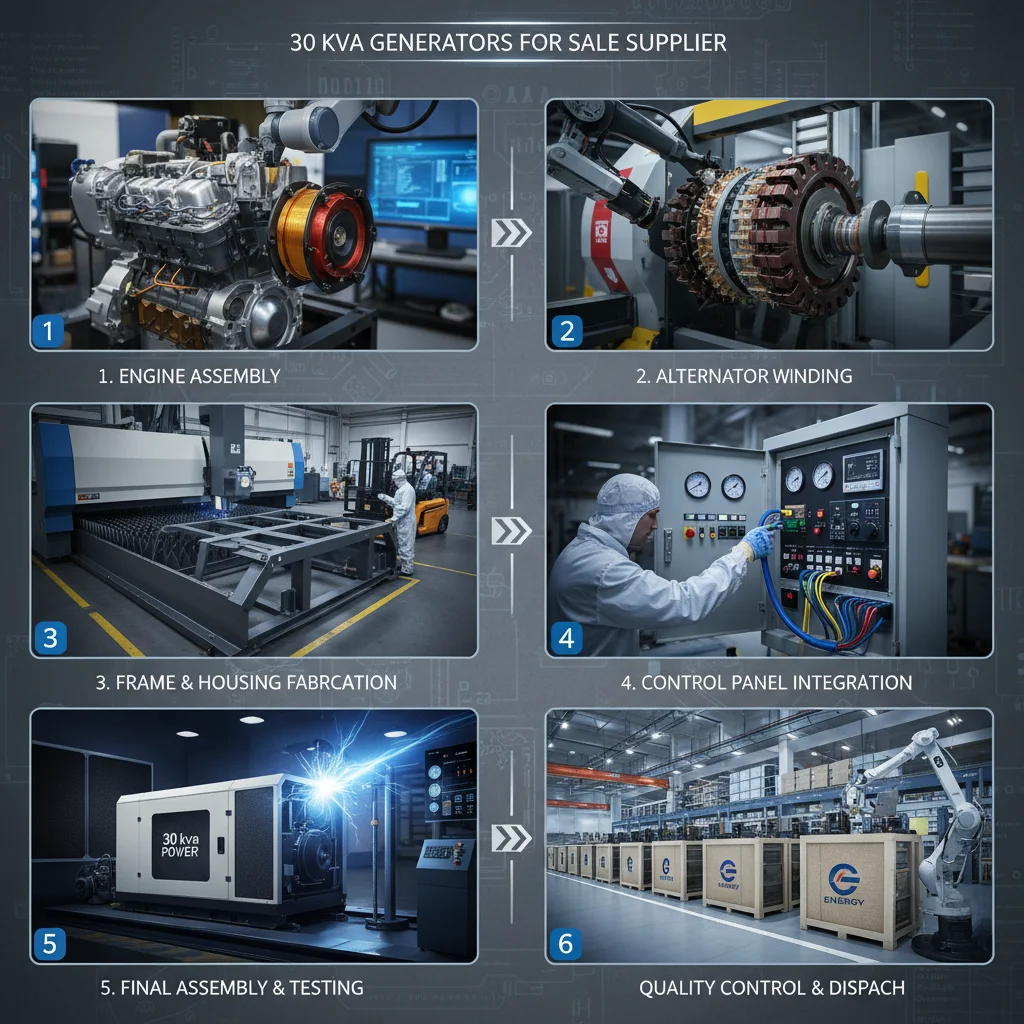
Selecting the right supplier involves auditing their manufacturing experience and quality control processes. A reputable supplier should provide a detailed load analysis and suggest a power range (e.g., 20 kVA to 2500 kVA) that fits the specific requirements of the property without excessive waste.
Evaluation should also focus on the availability of spare parts and the technical support infrastructure. Since these units are critical for emergencies, a supplier with a global service network or modular designs for easy maintenance is highly preferable.
Finally, consider the total cost of ownership (TCO). While a cheaper unit may have a lower initial price, a premium system from an experienced manufacturer often provides better fuel efficiency and a longer service life, reducing long-term operational expenses.
6Operational Maintenance and Longevity
The longevity of a diesel generator depends entirely on the rigor of its maintenance schedule. Key tasks include regular oil and filter changes, coolant level checks, and battery health monitoring. Neglecting these can lead to "fuel degradation," where diesel becomes unstable over time and clogs the fuel system.
Exercise cycles are critical; running the generator under a partial load once a month prevents the buildup of carbon deposits in the cylinders and ensures the lubrication system is fully active before a real emergency occurs.
Modern digital diagnostics have simplified this process. Many units now feature automated alerts that notify the owner via smartphone when a service interval is approaching or if a system anomaly, such as low oil pressure, is detected.
7Comparative Analysis: Diesel vs. Alternative Fuels
When deciding between diesel, natural gas, or propane, the choice usually depends on the required power duration and available fuel infrastructure. Diesel offers the highest energy density and is generally more reliable for heavy industrial loads over long periods.
Natural gas is often preferred for urban residential use due to its cleaner emissions and the convenience of a direct pipeline, though it lacks the fuel autonomy that an on-site diesel tank provides during catastrophic infrastructure failure.
| Fuel Type | Energy Density | Maintenance Frequency | Best Use Case |
|---|---|---|---|
| Diesel | Very High | Moderate | Heavy Load / Long Duration |
| Natural Gas | Moderate | Low | Urban Residential / Clean Air |
| Propane | High | Low | Remote Areas / Low Usage |
| Gasoline | Low | High | Small Backup / Portable |
| Biogas | Moderate | Moderate | Eco-Industrial / Farms |
| Hybrid/Solar | Variable | Very Low | Sustainable Microgrids |
Ultimately, the decision should be based on a trade-off analysis between fuel cost, environmental impact, and the level of reliability required for the specific application.
Frequently Asked Questions
Conclusion
Securing a reliable power backup system is an investment in safety and continuity. Whether for a residential estate or a critical commercial facility, the choice of a professional whole home diesel generator supplier determines the balance between performance, noise, and long-term reliability.
By focusing on technical specifications, emission compliance, and a rigorous maintenance plan, property owners can ensure their critical loads remain operational regardless of grid stability. For those evaluating suitable power solutions, detailed product specifications and range options can be reviewed at www.thegeneratorset.com.